Ticketing
 Market:
Italy
Market:
Italy



Welcome to Servotecnica Slip Ring Spotlights, our interview series offering a behind-the-scenes look at those driving innovation in slip ring technology here at Servotecnica. In this […]
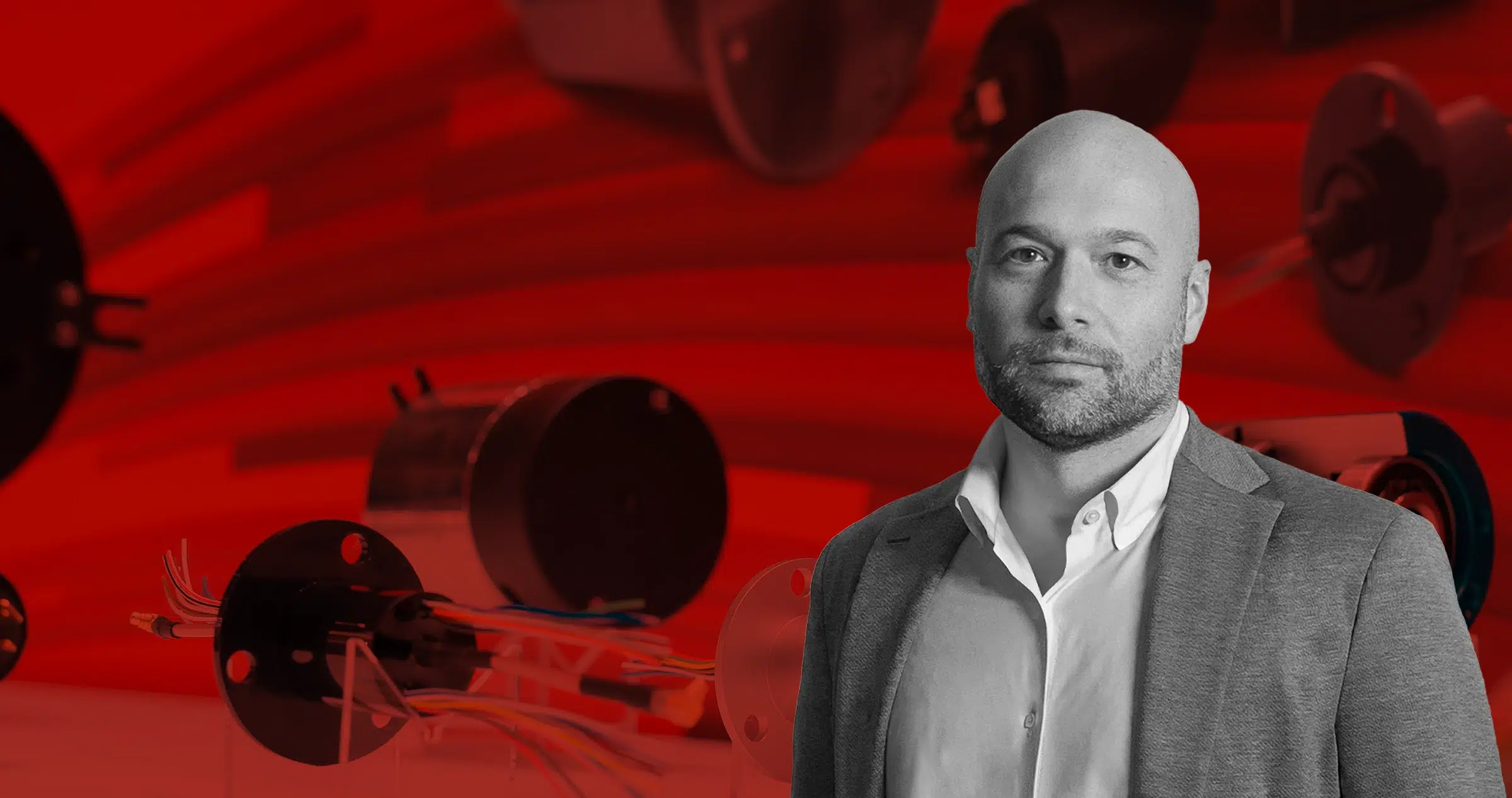
Welcome to Servotecnica Slip Ring Spotlights, our interview series offering a behind-the-scenes look at those driving innovation in slip ring technology here at Servotecnica. In this edition, we sit down with Matteo Salgarello, CEO of Servotecnica, to explore how modern slip rings enable the next generation of robotics and automation.
Q: Thanks for joining us, Matteo. To start, could you tell us a bit about your background and your role at Servotecnica?
A: Of course. I have been serving as CEO at Servotecnica for several years, where my focus is on shaping the company’s strategy and driving innovation in motion control technologies. With over four decades of experience in developing advanced rotary components, Servotecnica has built a strong reputation, and I am proud to have played a role in that ongoing journey. My background is in engineering, and I have always been driven by the challenge of turning advanced technologies into practical solutions which is exactly what we strive to do every day. I work closely with our teams to ensure we stay aligned with our customers’ evolving needs, particularly in areas such as high-reliability slip rings used in demanding applications. It is a deeply rewarding position, especially as we grow our global presence and continue collaborating with clients to deliver tailored, high-performance solutions.
Q: The theme of this interview is robotics and automation. Why are slip rings so critical for modern robotic and automated systems, and how do they enable next-generation robotics?
Slip rings are very important for any advanced system that requires continuous rotation. In robotics and automation, you frequently have joints or rotating platforms, such as a robotic arm’s wrist or a turntable on an assembly machine, that need to spin freely while still powering motors or transmitting sensor signals. Without slip rings, you would be limited by cables twisting and eventually breaking. Slip rings provide that freedom of full rotation while maintaining reliable electrical connections.
This is what allows robots to have rotating wrists, turrets, or endlessly swiveling joints for complex movements, enabling advanced capabilities in manufacturing and service robots. Modern slip rings have evolved to meet the increasing demands of today’s robots. They carry not just power but also high-speed data for cameras and sensors, all through a single rotating interface. For example, many of our designs can transmit high-definition video, Ethernet, control signals, and power simultaneously without interrupting the data flow, which is essential for advanced automation and vision-guided robots.
We have built a very broad range of slip ring designs to serve these needs. In fact, Servotecnica offers more than two thousand standard models of electrical rotary joints, along with roughly four hundred custom models developed for specific applications. This large portfolio allows us to support everything from miniature robots, using slip rings as small as about 12.4 millimeters in diameter, to industrial automation systems, which use larger through-bore slip rings over 100 millimeters for passing pipes or shafts.
Essentially, slip rings are an enabling technology for robotics and automation. They ensure reliable motion continuity by allowing continuous rotation with uninterrupted power and data flow. As robots and automated machines become more sophisticated, the role of slip rings has never been more essential.
Q: What unique requirements do robotics and advanced automation applications place on slip rings, and how does Servotecnica address those challenges?
Robotics and automation often push slip rings to extreme performance on several fronts. Over the years, we have identified a number of key requirements and design challenges, and we engineer our products specifically to meet them:
Compact Size
Robotic joints and automated instruments usually have very tight space constraints. We often need to fit significant functionality into a miniature slip ring without sacrificing performance. Every millimeter counts, especially in small robotic wrists or inspection robots that operate in narrow environments. Servotecnica designs capsule slip rings and ultra-flat versions to maintain a slim profile while delivering the required functionality.
Low Electrical Noise and Signal Integrity
Advanced robots rely on high-definition cameras and sensitive sensors, so the slip ring must transmit data with high fidelity. We carefully engineer our slip rings with internal layouts, shielding, and sometimes fiber-optic channels to maintain signal quality. This keeps data links, such as video feeds or synchronous Ethernet networks, clean and reliable, as if there were no rotating interface at all.
High Rotational Life
Robots and automated machines often perform millions of revolutions during their lifecycle. Slip rings in these systems must withstand continuous operation. We use advanced materials, including gold-alloy contacts and low-wear brushes, to maximize longevity. For continuous-duty systems.
Environmental Resistance
Many robotics applications run in challenging environments. Factory robots may face dust, oil, or welding spatter, and outdoor robots must withstand weather and temperature extremes. We frequently include robust sealing and durable housings in our slip ring designs. Stainless steel enclosures and IP65-rated protection are just a few examples that allow our products to operate reliably even in demanding settings.
Low Torque and Smooth Rotation
In precision robotics, such as inspection systems or surgical equipment, the slip ring must not introduce excess friction. We design for low turning torque to ensure smooth and sensitive robot movement. This helps maintain precise control and reduces wear on the robot’s components.
By addressing these aspects, we tailor our slip rings to fit the exact needs of each robotics and automation project. Our engineering team frequently works side by side with OEMs to strike the right balance for each application.
Q: Can you share an example of a slip ring solution or development from Servotecnica that has helped push the boundaries for a robotics or automation application?
One recent example is a custom-designed ultra-flat slip ring we developed for a robotic welding application. In these systems, space is extremely limited at the tool end, yet high currents are needed. We created a design with a total height of less than eight millimeters that can handle up to ten amps per circuit. It is a hollow-shaft solution, allowing room for cables or fluids to pass through the center. The slip ring also uses specialized brushes and materials to achieve a long life, with a rating of up to ten million revolutions. It solved the challenge of providing robust power connectivity in a very compact and maintenance-friendly package.
Another example is our work on integrated robotic joints. Many robot designers prefer complete joint modules that include everything they need. This inspired us to develop the SVTM series, which combines a brushless motor, high-resolution encoder, zero-backlash gearbox, and hollow shaft. The shaft is designed to accommodate wiring and even a slip ring, allowing full rotation and signal continuity within a single compact module. This gives designers a ready-made joint that saves them engineering time and effort while maintaining flexibility.
These examples show how we adapt and innovate to help customers in real-world robotics applications. Our solutions help ensure long-term performance and ease of integration.
Q: Finally, looking ahead, what do you see on the horizon for slip ring technology in robotics and automation? How is Servotecnica preparing for the future?
The demands placed on robotics are increasing every year. More sensors, higher data rates, greater power requirements, and more compact designs are all driving the evolution of slip rings. At Servotecnica, we are investing in innovations such as fiber-optic rotary joints and hybrid rotary unions that combine multiple transmission methods in one compact product. These are ideal for robots that need to stream real-time data or carry mixed power and signal types through rotating connections.
We are also focused on extending product life and reliability. Technologies like contactless power transfer and advanced wear-resistant materials are helping us move toward truly maintenance-free slip rings. This is especially important for robots operating in remote or hard-to-access locations.
In the longer term, we see more integration and modularity. Robot builders want components that are easier to assemble and more adaptable to their systems. Our SVTM joint modules and customizable slip ring designs are a direct response to this trend.
Our goal is simple. We want robot designers to never worry about the rotating interface. They should be able to expect continuous, clean signal transmission and reliable power with no surprises. That is what we mean by reliable motion continuity, and it is a principle that will continue to guide our development in the years ahead.